
Creating a home workspace that is both cozy and productive can transform your work-from-home experience. Whether you’re managing a full-time remote job, freelancing, or just need a dedicated area for occasional tasks, the right setup can boost your focus and comfort. In this post, we’ll share practical tips to help you design a home office that feels inviting and supports your daily productivity.
Why a Cozy Workspace Matters
Before diving into the how-to, it’s helpful to understand the importance of a comfortable workspace. A cozy environment reduces stress and makes working more enjoyable. When you feel physically comfortable, you’re less likely to get distracted by discomfort and more likely to maintain concentration on your tasks. Plus, a pleasant area encourages a better work-life balance, especially when your office is part of your living space.
Choosing the Right Location
Find a Quiet Spot
Select an area in your home where you can minimize noise and interruptions. It might be a spare room, a corner of a bedroom, or even a section of the dining room. A quieter space helps you focus better and improves the quality of your work.
Consider Natural Light
If possible, position your desk near a window. Natural light can boost mood and energy, reducing the strain on your eyes during long work hours. If natural light is limited, invest in good-quality, adjustable lighting to mimic daylight.
Furniture and Ergonomics
Invest in a Comfortable Chair
A supportive chair is a must-have for any workspace. Look for one with adjustable height, good lumbar support, and enough padding to keep you comfortable during extended periods.
Choose a Suitable Desk
Your desk should provide enough surface area for your computer, notebook, and other tools. Make sure it’s the right height for your body to avoid slouching or shoulder strain.
Maintain Good Posture
Position your monitor at eye level and keep your keyboard and mouse within easy reach. Sitting with your feet flat on the floor and your back straight helps prevent discomfort and long-term injuries.
Personalizing Your Space
Use Colors That Inspire
Color affects mood and productivity. Soft blues and greens tend to have calming effects, while bright colors like yellow can stimulate creativity. Choose hues that make you feel comfortable and energized.
Add Cozy Touches
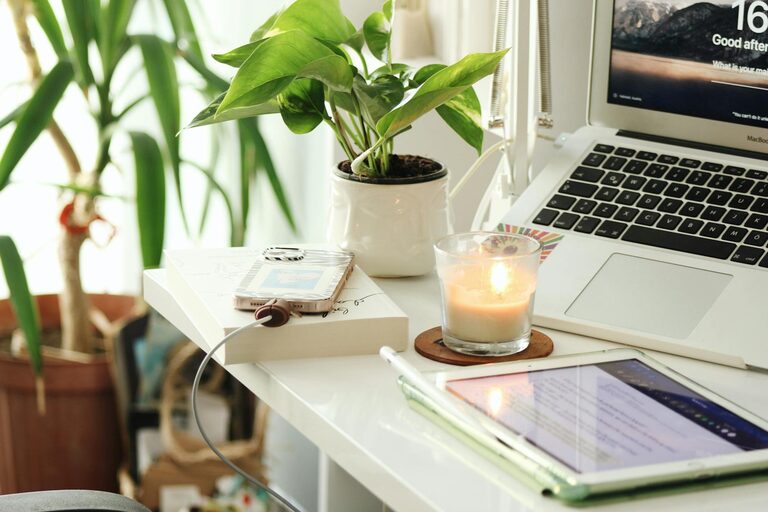
Include soft elements like cushions, a throw blanket, or a small rug. Plants can also add warmth and improve air quality. Displaying photographs or artwork that you enjoy can make the space feel more inviting.
Organization Strategies
Declutter Your Desk
Keep only essential items on your desk to maintain focus. Too many visual distractions can reduce productivity.
Use Storage Solutions
Shelves, drawers, and organizers help keep paperwork, office supplies, and gadgets tidy. Label storage containers to find items quickly.
Create a Filing System
Organize documents digitally or in physical folders. A clear system reduces stress when locating materials for work.
Technology Tips
Reliable Internet Connection
Ensure your workspace has a strong internet connection to avoid interruptions during video calls or online tasks.
Manage Cables Neatly
Use cable ties or clips to keep cords organized and out of the way to maintain a clean workspace.
Invest in Accessories
Consider ergonomic keyboards, noise-canceling headphones, or external monitors to enhance comfort and efficiency.
Maintain Boundaries
Set Work Hours
To stay productive, establish regular work hours. Communicate these with others in your household to minimize distractions.
Take Breaks
Incorporate short breaks into your schedule to stretch, relax your eyes, and refresh your mind.
Separate Work and Leisure
If space allows, avoid working from areas associated with relaxation, like the bed or couch. This helps maintain clear mental boundaries between work and rest.
Final Thoughts
Creating a cozy and productive home workspace doesn’t have to be complicated or expensive. With thoughtful choices in location, furniture, personalization, organization, and technology, you can build an environment that supports both your comfort and work goals. Remember, your workspace should reflect your needs and preferences so you feel motivated and at ease every day. With these tips, you’re well on your way to designing a home office that works as hard as you do.
Related Posts

Tips for Creating a Relaxing Home Office Environment
Creating a relaxing home office environment is essential for maintaining…

Tips for Creating a Cozy and Productive Home Office Space
Creating a home office that is both cozy and productive…
Tips for Creating a Relaxing Home Office Environment
Creating a relaxing home office environment is essential for maintaining…